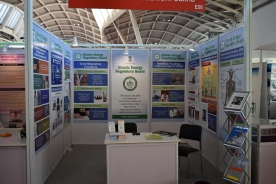

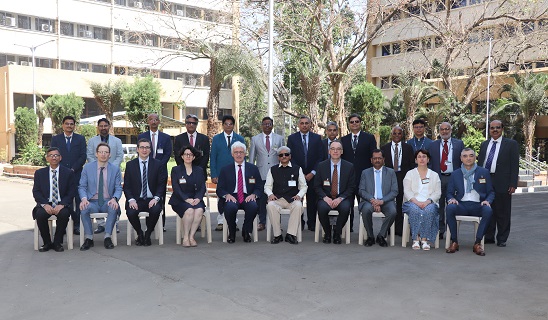
Chief of French Nuclear Safety Authority (ASN) with his team visits Atomic Energy Regulatory Board (AERB)
Read More
AERB celebrates 75th Republic Day on 26th January 2024 in the complex of Niyamak Bhavan, with the unfurling of National flag and singing of patriotic songs. On the occasion, Chairman, AERB addressed AERBites
Read More
Republic day in pictures
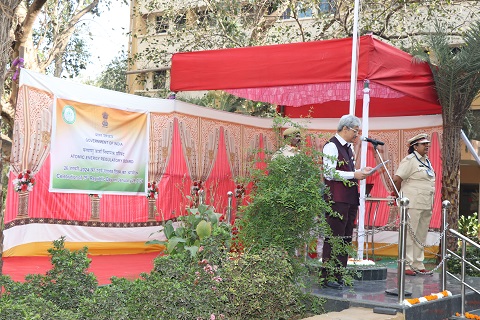
Chairman AERB delivering Dr S.S.Ramaswamy endowment lecture in 39th DAE Safety & Occupational Health Professionals Meet, being jointly organised at UCIL, Narwapahar from Dec 27-29, 2023.
Read More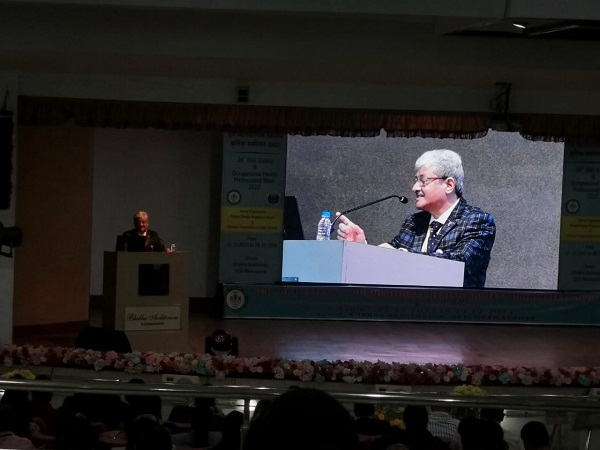
AERB hosted a one-day National Conference on Regulatory Interface (NCRI) on December 08, 2023 at Mumbai
Read More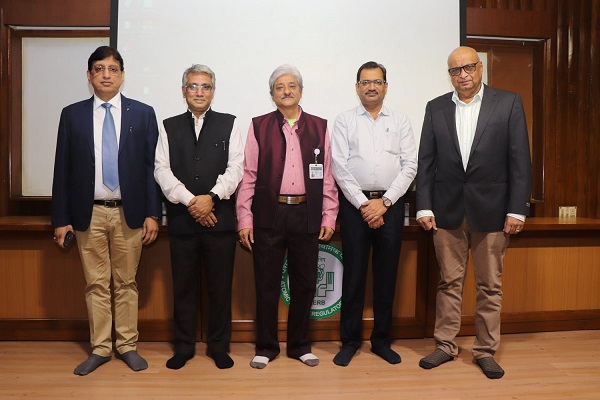
Bangladesh delegation visit to AERB
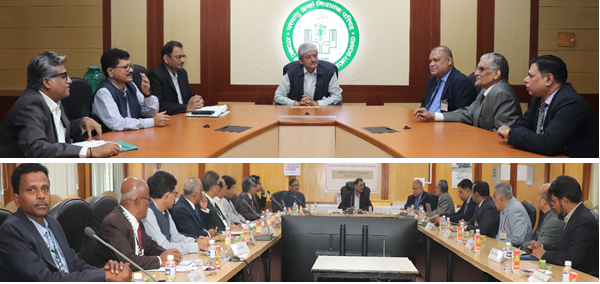
A delegation from Bangladesh visited Atomic Energy Regulatory Board (AERB) on November 21, 2023 and held discussion with AERB officials as part of the 4th Joint Committee Meeting between India and Bangladesh. During the discussion both the parties affirmed to carry forward the technical cooperation between AERB and Bangladesh Atomic Energy Regulatory Authority (BAERA) under the bilateral Arrangement
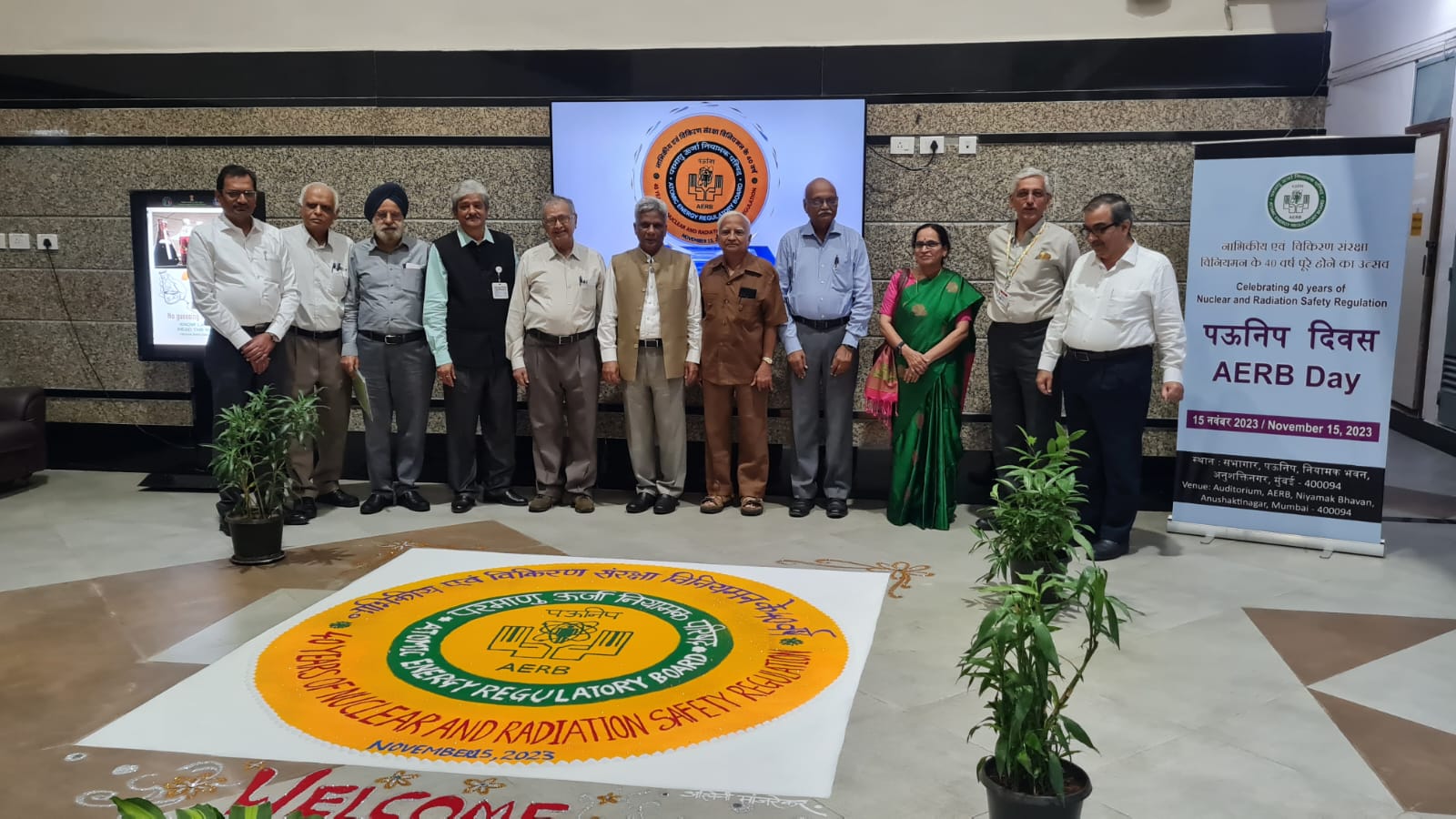
On completion of forty years, AERB celebrated its ruby jubilee anniversary on 15th November, 2023 to capture the experience of introspection and transformation in the last four decades. Stalwarts of Indian nuclear fraternity came together to extend their wishes to AERB on this momentous occasion.
(From Left to Right) Shri S.B.Chafle,ED, AERB Shri S.A.Bharadwaj, Former Chairman, AERB Shri S.S.Bajaj, Former Chairman, AERB, Shri D.K.Shukla, Chairman, AERB, Shri S.K.Mehta, Member, Advisory Panel, AERB, Dr A.K.Mohanty, Chairman, AEC, Shri G.R. Srinivasan, Former Vice-Chairman, AERB, Dr. R.K.Sinha, Former, Chairman, AEC & Principal Technical Adviser, DAE, Prof. Lakshmi Kantam, Member of Board of AERB, Dr. K.N.Vyas, Former Chairman, AEC and Homi Bhabha Chair, Shri Vivek Bhasin, Director BARC.
Read More
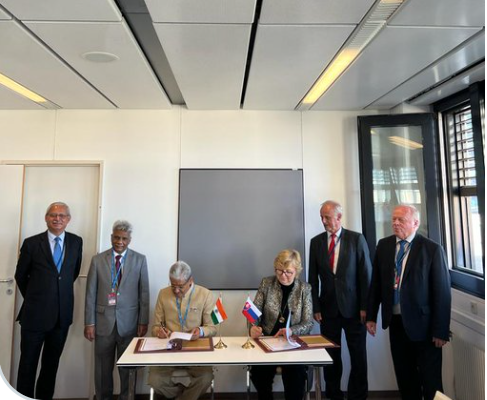
On the margins of the 67th IAEA General Conference, India's Atomic Energy Regulatory Board (AERB) & Nuclear Regulatory Authority of the Slovak Republic (UJD SR) signed an MoU on 25/09/2023 for the exchange of technical information and cooperation in the field of regulation of the safe use of nuclear energy for peaceful purposes. The MoU was signed by AERB Chairman, Mr. Dinesh Kumar Shukla, and UJDSR Chairperson, Ms. Marta Žiaková, in the presence of dignitaries of the respective countries.
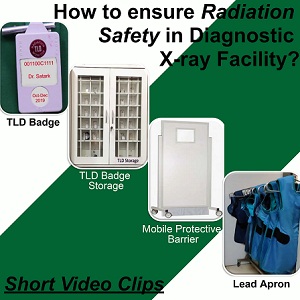
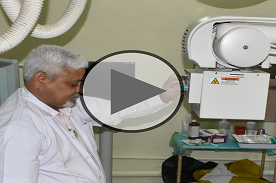
In order to enhance radiation safety awareness among personnel working in Diagnostic Radiology, AERB has developed a video on 'Radiation Safety in Fluoroscopy'.
Read more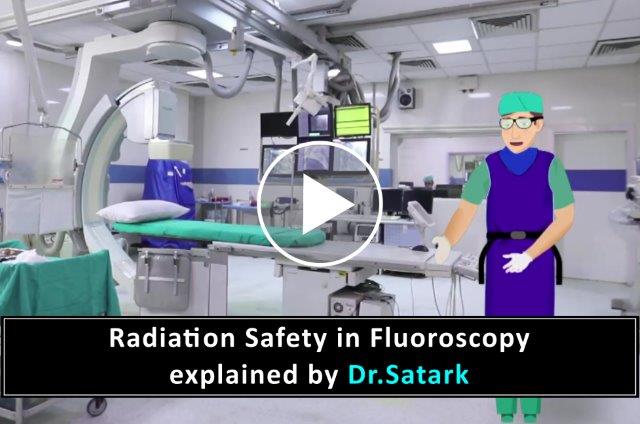
Atomic Energy Regulatory Board has established a HELP DESK (022-25990675) for providing Regulatory Support to users of Radiation Facilities, which is functional during 10:00 hours to 17:00 hours on all working days (Monday to Friday)
Read More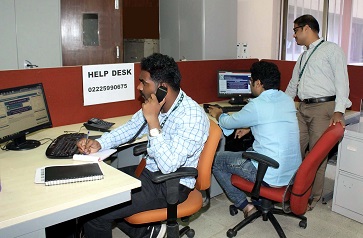
- eLORA Diagnostic Radiology (DR) guidelines
- Qualification for personnel in DR facilities
- Layout guidelines for DR facilities
Latest News

22-Mar-2024
04-Mar-2024
 /
/ /
/ /
/


 /
/