
|
CONVENTION
ON NUCLEAR SAFETY
(Archives)
|
|
|
|
- Highlights
from 5th Review Meeting of Contracting Parties - 2011
India
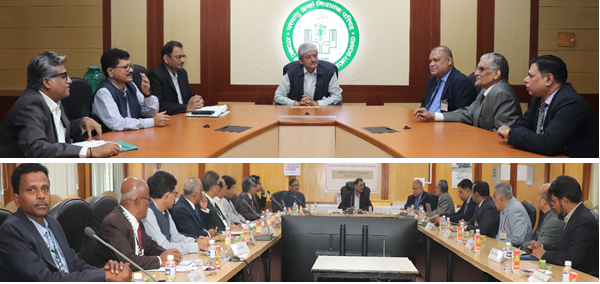
presented the safety status of its nuclear power plants, and
its regulatory and safety review system to an international
gathering of experts in the 5th Review Meeting of the Convention
on Nuclear Safety (CNS), held at the Headquarters of the International
Atomic Energy Agency in Vienna from 4-14 April 2011. India is
a Contracting Party to the Convention, which has 72 member countries.
The Convention requires the member countries to present the
safety status of their nuclear power programme every three years.
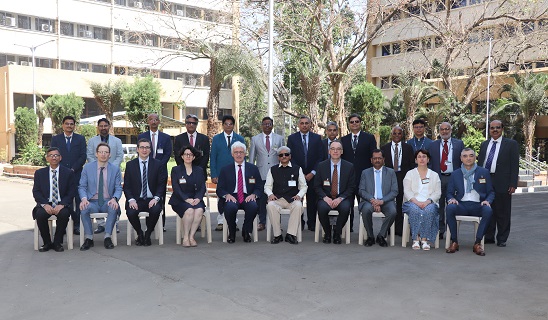
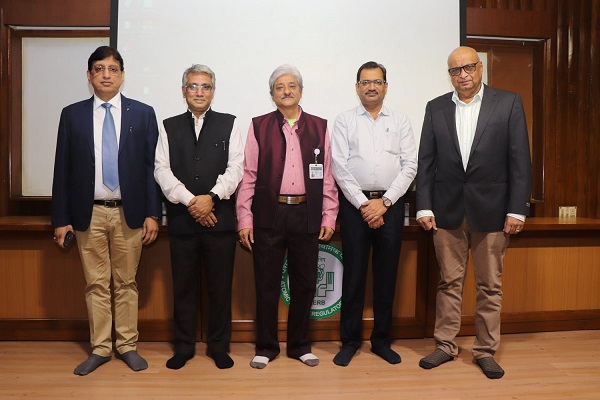
A thirteen member highlevel Indian delegation led by Shri S.S.
Bajaj, Chairman, Atomic Energy Regulatory Board (AERB), participated
in the CNS Review Meeting. The delegation included scientists
from Atomic Energy Regulatory Board, Nuclear Power Corporation
of India Ltd., Bhabha Atomic Research Centre, Indira Gandhi
Centre for Atomic Research, and Permanent Mission of India in
Vienna. 60 Countries participated in the review meeting. India’s
report and its presentation elicited considerable interest,
with discussion on areas like India’s regulatory frame
work, human factors & safety culture and processes for new
reactor licensing & siting and others.
|
|
-
National
Report to the Convention on Nuclear Safety - Fifth Review
Meeting of Contracting Parties - April 2011
The
Government of India ratified the Convention on Nuclear Safety
on March 31, 2005. This is the second National Report being
submitted by India for review by the Contracting Parties,
pursuant to Article 5 of the Convention on Nuclear Safety,
which entered into force on 24 October 1996. The Report demonstrates
how Government of India has fulfilled its obligations under
Articles 6 through 19 of the Convention.
This
National Report was prepared in accordance with the "Guidelines
Regarding National Reports under the Convention on Nuclear
Safety" issued as information circular INFCIRC/572/Rev.3.
Accordingly, all land-based nuclear power plants including
storage, handling and treatment facilities for radioactive
materials attached to the NPP and are directly related to
the operation of nuclear power plants are covered in the national
report.
Read
Full Report
|
|
-
National
Report to the Convention on Nuclear Safety - Fourth Review
Meeting of Contracting Parties - April 2008
The
Convention on Nuclear Safety (CNS) was adopted in Vienna on
17 June 1994 by a Diplomatic Conference convened by the International
Atomic Energy Agency at its Headquarters from 14 to 17 June
1994. The Convention entered into force on 24th October 1996.
-
The objectives of this Convention are:
-
To
achieve and maintain a high level of nuclear safety worldwide
through the enhancement of national measures and international
co-operation including, where appropriate, safety-related
technical co-operation;
-
To
establish and maintain effective defences in nuclear installations
against potential radiological hazards in order to protect
individuals, society and the environment from harmful effects
of ionizing radiation from such installations;
-
To
prevent accidents with radiological consequences and to mitigate
such consequences should they occur.
CNS
is an incentive convention that aims to legally commit participating
States operating land-based nuclear power plants to maintain a
high level of safety through exhaustive peer review process conducted
every three years. The Convention obligates Contracting Parties
to submit reports on the implementation of CNS articles for "peer
review" at meetings of the contracting parties to be held
every three years.
The obligations under the convention covers
- Review
of Safety of the existing nuclear installations.
-
Establishment
of legislative and regulatory framework, establishment of
regulatory body and responsibility of the license holder.
-
General
safety considerations for priority to safety, financial
and human resources, human factors, quality assurance, assessment
and verification of safety, radiation protection and emergency
preparedness.
-
Safety
of installations during siting, design & construction
and operation.
All
countries with operating nuclear power plants are parties to the
Convention. As of now, there are 65 signatories to the Convention
and 63 Contracting Parties.
India ratified the Convention on March 31, 2005. The first National
Report of India was submitted for review by the Contracting Parties
to the Convention on 24th September 2007. On India’s national
report, 20 Contracting Parties asked 143 questions.
The
responses to these questions were posted well before the stipulated
last date March of 31, 2008. Sixty questions / comments were raised
by India on the national reports of 12 countries.
Read
Full Report |
| |
|
- 4th
Review Meeting of the Contracting Parties to CNS - 2008
India
participated in the 4th review meeting of CNS in Vienna in April
2008. The Indian delegation comprised of experts from AERB,
NPCIL and BARC and was led by Shri S. K. Sharma, Chairman, AERB.
In the review meeting, the national report was orally presented
where after there was a discussion on the presentation. The
contracting parties appreciated the effective regulatory review
structure, the strong R & D support available for nuclear
safety from BARC and IGGAR and the excellent safety status of
nuclear power plants in India. They also commended the several
good safety practices like strong experience feedback review
mechanism, utility’s internal safety review mechanism
and systematic collective radiation dose reduction programme
that are followed in India. India also mentioned the planned
measures to improve safety like extended work on probabilistic
safety analysis, development of severe accident management guidelines
for nuclear power plants and technology improvements in areas
like en-masse replacement of coolant channels in Naraora-2 and
Kakrapar-2 reactors, life management of Zr-Nb coolant channels,
primary heat transport system feeders and flow assisted corrosion
of secondary systems piping.. Future challenges were identified
in the areas of recruitment and training of additional experts
to strengthen AERB, Licensing of new designs for upcoming plants,
reliability of digital I&C for safety functions and reliability
of passive safety systems.
|
|